
Treating Tennis Elbow
PRP Injection Instead of Cortisone
Tennis elbow is a persistent tendon condition—not because it’s difficult to treat, but because standard therapy targets the wrong area. With Red PRP, I deliver concentrated, anti-inflammatory substances directly to the tendon insertion—guided by ultrasound and derived from the patient’s own blood—at my private practice in Kronberg im Taunus.
Key Points at a Glance
Tennis Elbow & PRP: The Most Important Points at a Glance
What is tennis elbow?
A chronic tendinopathy at the attachment site of the forearm extensor tendons on the outer side of the elbow (lateral epicondylitis). Despite its name, it is more commonly caused by office work or manual labor than by playing tennis.
Why doesn't cortisone often provide lasting relief?
Cortisone reduces inflammation in the short term—but at the tendon insertion, the tissue has undergone chronic degenerative changes rather than being primarily inflamed. Repeated cortisone injections can cause further damage to the tendon tissue.
Which type of PRP is used?
Red PRP (leukocyte-rich plasma) – catabolic and anti-inflammatory. It provides a controlled biological stimulus that can break the vicious cycle of irritation, microdamage, and chronic pain at the tendon insertion.
How many sessions?
3 injections at weekly intervals. Onset of effect: 4–6 weeks after the first session.
How much does the treatment cost?
260–270 € per preparation, plus the GOÄ injection fee. Approximately 70% of private health insurance plans cover the costs.
Why tennis elbow is so persistent—and why cortisone often isn't the answer
The name is misleading: Most people who come to my practice with tennis elbow don’t play tennis. They are architects, lawyers, physical therapists, and tradespeople—people who have been performing the same movement with their forearm and wrist for years, and whose tendons eventually give out.
Medically speaking, this condition is known as lateral epicondylitis of the humerus: an inflammation often followed by degenerative changes at the insertion of the forearm extensor tendons on the lateral epicondyle. The extensor carpi radialis brevis is most commonly affected—a tendon responsible for wrist extension that, due to its anatomical location, has poor blood supply.
That is precisely the core problem. Tendon tissue is bradytrophic—it has very few blood vessels of its own. Minor micro-injuries heal only very slowly because the body’s own repair substances have difficulty reaching the site. This often leads to a chronic cycle: irritation, inflammatory response, incomplete repair, renewed irritation. This cycle often perpetuates itself for months or years.
The problem with cortisone: A cortisone injection temporarily interrupts this cycle—the pain subsides, and mobility returns. But cortisone does not address the underlying tissue degeneration. Repeated injections can further weaken the tendon tissue at its attachment site, as blood flow is reduced. Many patients who come to see me report that the treatment is effective, but that the effects last for a shorter period with each subsequent injection.
White or Red PRP?
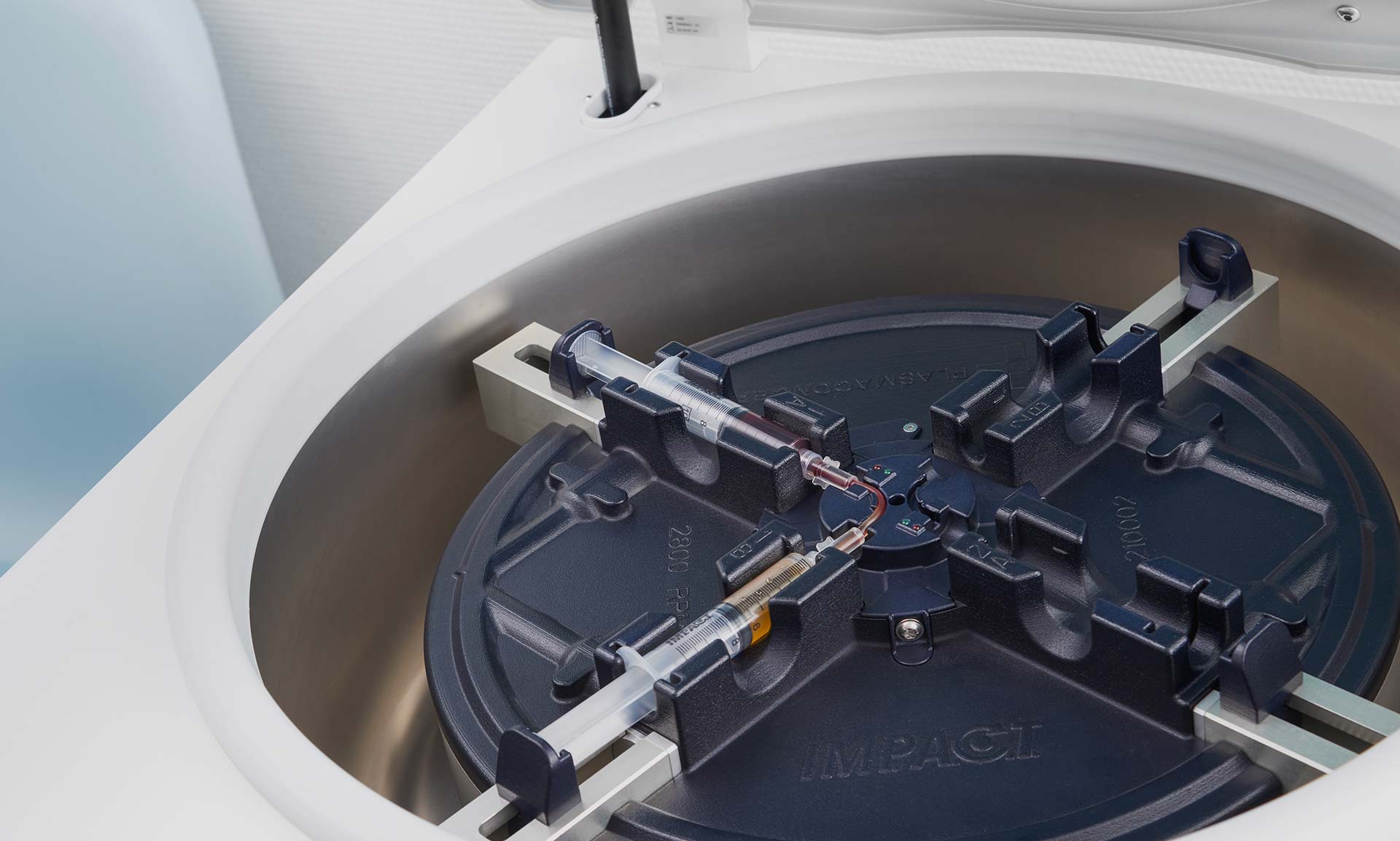
Red PRP for Tennis Elbow:
Why the Choice of Product Is Crucial
Not all PRP therapies are the same, and when it comes to tennis elbow, choosing the right formulation is clinically significant.
White PRP or Red PRP?
For fresh tendon tears or degenerative changes without an active inflammatory cycle, I use White PRP —leukocyte-poor, anabolic plasma that supports tissue regeneration. With tennis elbow, the situation is different: The tissue is chronically irritated, the inflammatory cycle has become entrenched, and it barely responds to the body’s own regenerative capabilities. In this case, Red PRP is the right choice. Red PRP contains a higher proportion of white blood cells (leukocytes). It has a catabolic effect—it triggers a controlled, targeted inflammatory response that can reactivate the stalled process at the tendon insertion. The body responds with a genuine healing reaction that it would no longer have been able to initiate on its own.
This distinction is important in practice. A patient who has had tennis elbow for three months requires a different clinical approach than someone who has been receiving cortisone for two years and whose tendon insertion has undergone degenerative changes. I decide which medication to use based on the findings, the ultrasound image, and the clinical examination—on a highly individualized basis.
Procedure
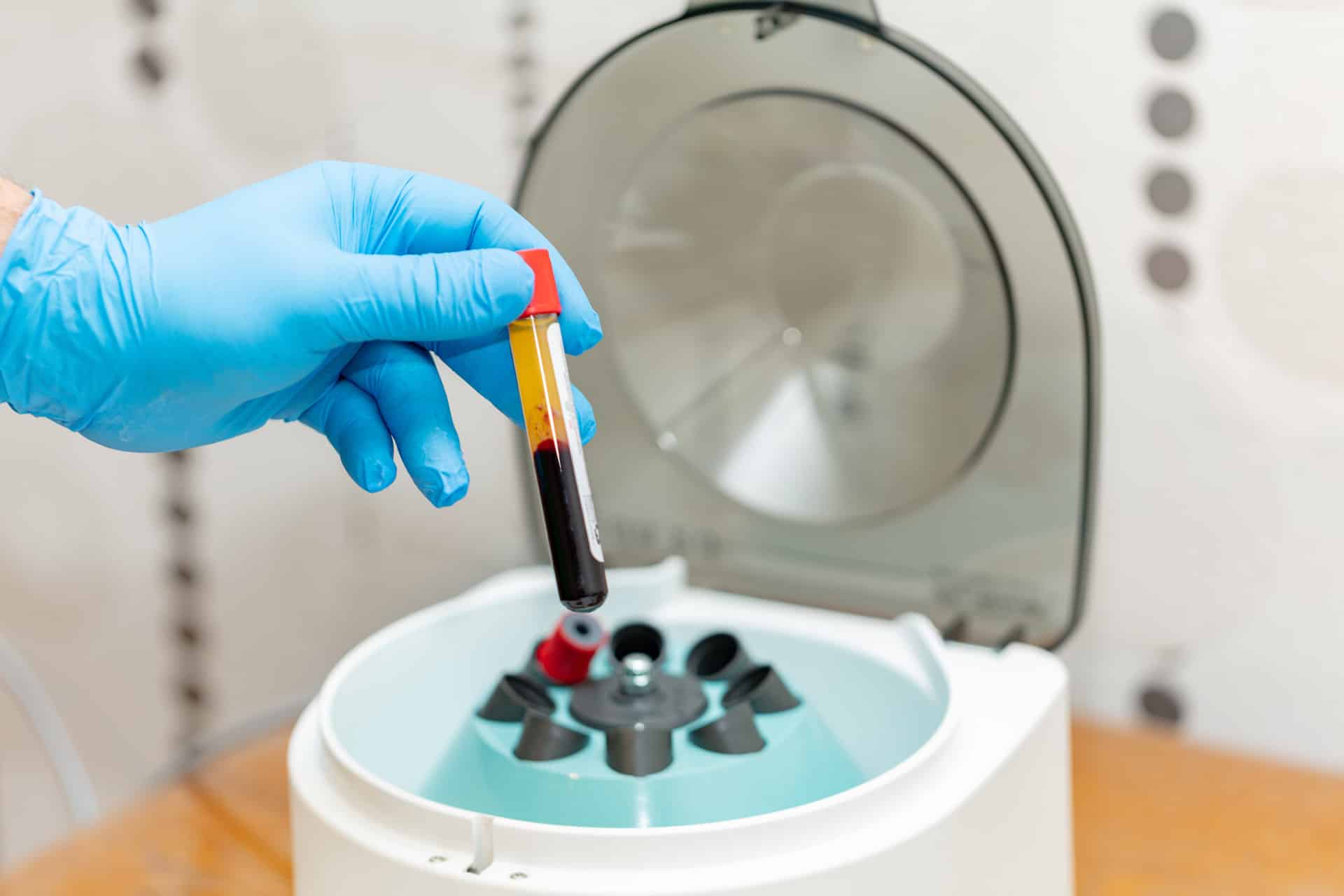
Here's how PRP treatment works at my practice
The production of autologous cell therapies under the German Medicines Act requires regulatory approval. My practice has obtained this approval from the Darmstadt Regional Council. This means that all manufacturing steps, quality standards, and hygiene requirements have been verified by the government—a standard not met by every practice that offers PRP.
Make an appointment online now
Blood draw
Approximately 10–15 ml of blood is drawn from a vein in the arm. From that point on, the blood remains in a closed, sterile system—no open handling, no risk of contamination.
Fully automated processing with the IMPACT® Platform
The blood is processed automatically. A built-in optical sensor precisely identifies the blood fractions and controls the separation process without manual intervention. The result is a highly concentrated Red PRP preparation tailored to the individual’s specific findings.
Ultrasound-guided injection at the tendon insertion
The prepared PRP is injected directly into the tendon insertion of the extensor carpi radialis brevis under ultrasound guidance. Blind injections without imaging often fail to precisely reach the target tissue at the epicondyle—given that the tendon insertion is only a few millimeters in size, ultrasound guidance is not merely an option but a medical necessity. The injection is performed under local anesthesia.
The entire treatment takes about 15–20 minutes per session. Afterward, I recommend resting the treated arm for 24–48 hours.
For more information on the IMPACT® Platform: autologe-zelltherapien.de
Medical assessment
My Approach to Tennis Elbow: PRP Based on Findings, Not on a Set Protocol
As a specialist in orthopedics and trauma surgery, I perform elbow surgeries—arthroscopically, and in cases of tendon ruptures, through open surgery as well. I am familiar with the surgical approach, and I understand its consequences.
Surgery is rarely indicated for tennis elbow. The guidelines specify that nine to twelve months of conservative treatment are required before surgery is even considered. What this means in practice is that almost all the patients I see can be treated conservatively—if the right method is found.
Physical therapy strengthens the surrounding muscles and is important. Splints provide short-term relief. Cortisone relieves pain—but it does not break the underlying cycle of microdamage, incomplete healing, and chronic irritation at the tendon insertion.
PRP can be effective in some of these cases. In cases of chronic lateral epicondylitis that do not show lasting improvement despite physical therapy, splinting, and cortisone, my clinical experience has shown that Red PRP is an effective adjunct to existing treatment for some patients. We will discuss which form is appropriate for you and whether PRP is a suitable option based on your examination findings.
Patients from Frankfurt, Bad Homburg, Königstein, and the Hochtaunus district come to me with exactly these symptoms: tennis elbow that doesn't get better despite all standard treatments. I take a close look at the medical findings.
Make an appointment online now
Costs
Costs and Coverage
Autologous blood therapy for tennis elbow is a non-covered service (IGeL) and is not reimbursed by statutory health insurance. Private health insurance plans may cover all or part of the costs, depending on your plan—please check with your private health insurance provider in advance. Upon request, I can prepare a cost-reimbursement application in advance so that you have full cost transparency before treatment begins.
The manufacturing cost per dose is €260–270. In addition, there are medical fees for the injection, billed according to the GOÄ. Self-pay patients are welcome.
Dr. Braune's practice is a private practice and is open exclusively to private patients and self-pay patients.
Schedule an appointment now for tennis elbow treatment in Kronberg
Patients from Frankfurt, Bad Homburg, Königstein, and throughout the Hochtaunus district come to my private practice in Kronberg im Taunus for PRP treatment. Appointments are often available on short notice—please contact me for current availability.
Specific tendon disorders treated in my practice
Second opinion before surgery
If surgery on the elbow has been recommended—seek an independent evaluation from an experienced surgeon.
Treatment
Tendon Injuries & PRP
Why the choice of medication determines the success of treatment.
Treatment
Golfer's Elbow & PRP
PRP for medial epicondylitis—tendon insertion on the inner side of the elbow; same logic, different anatomy.
Treatment